Academy of LIFE: A digital presence that grows with the school
For Academy of LIFE, we built a website in Webflow from scratch that brings the school's concept to life and guides families all the way to application.
Results speak Klar
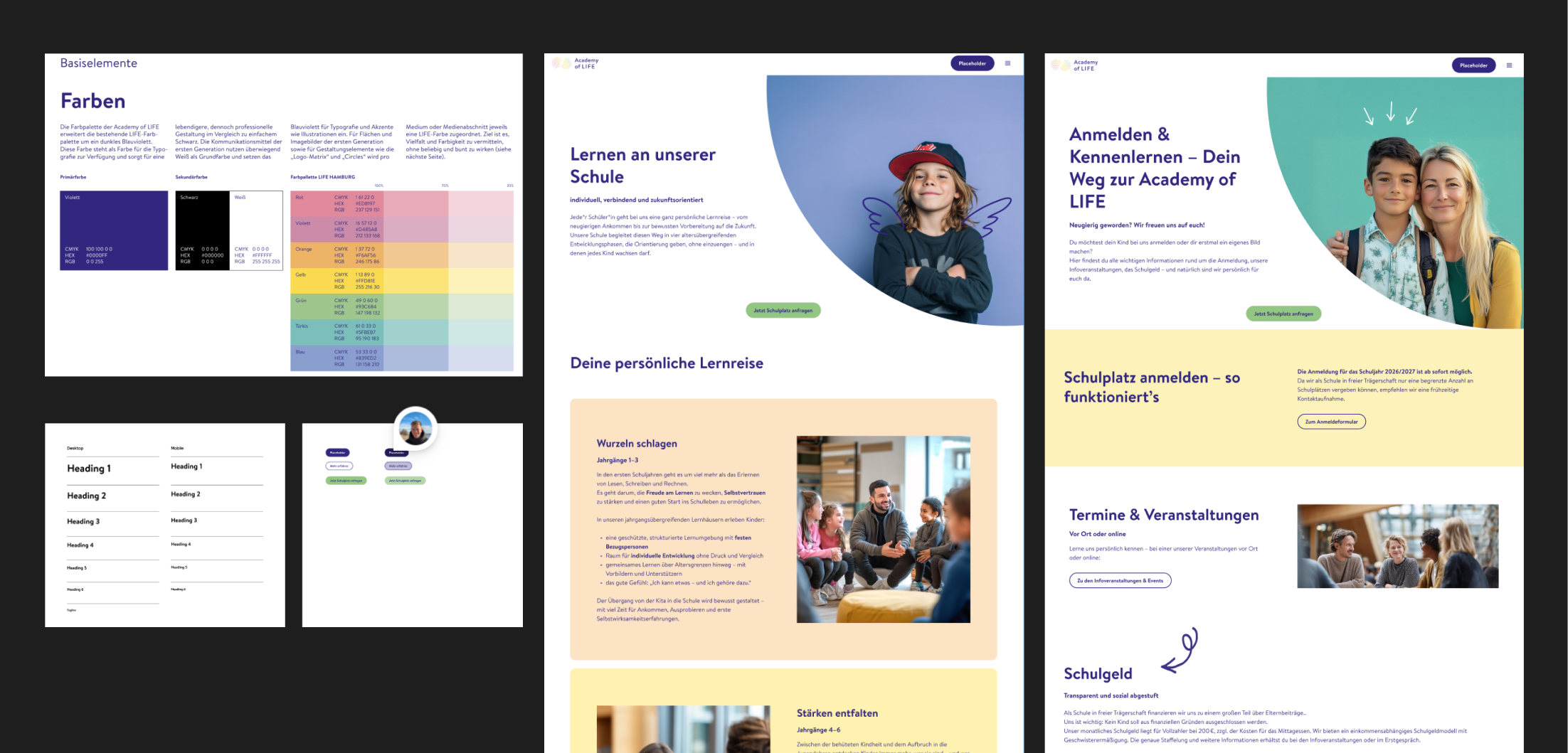
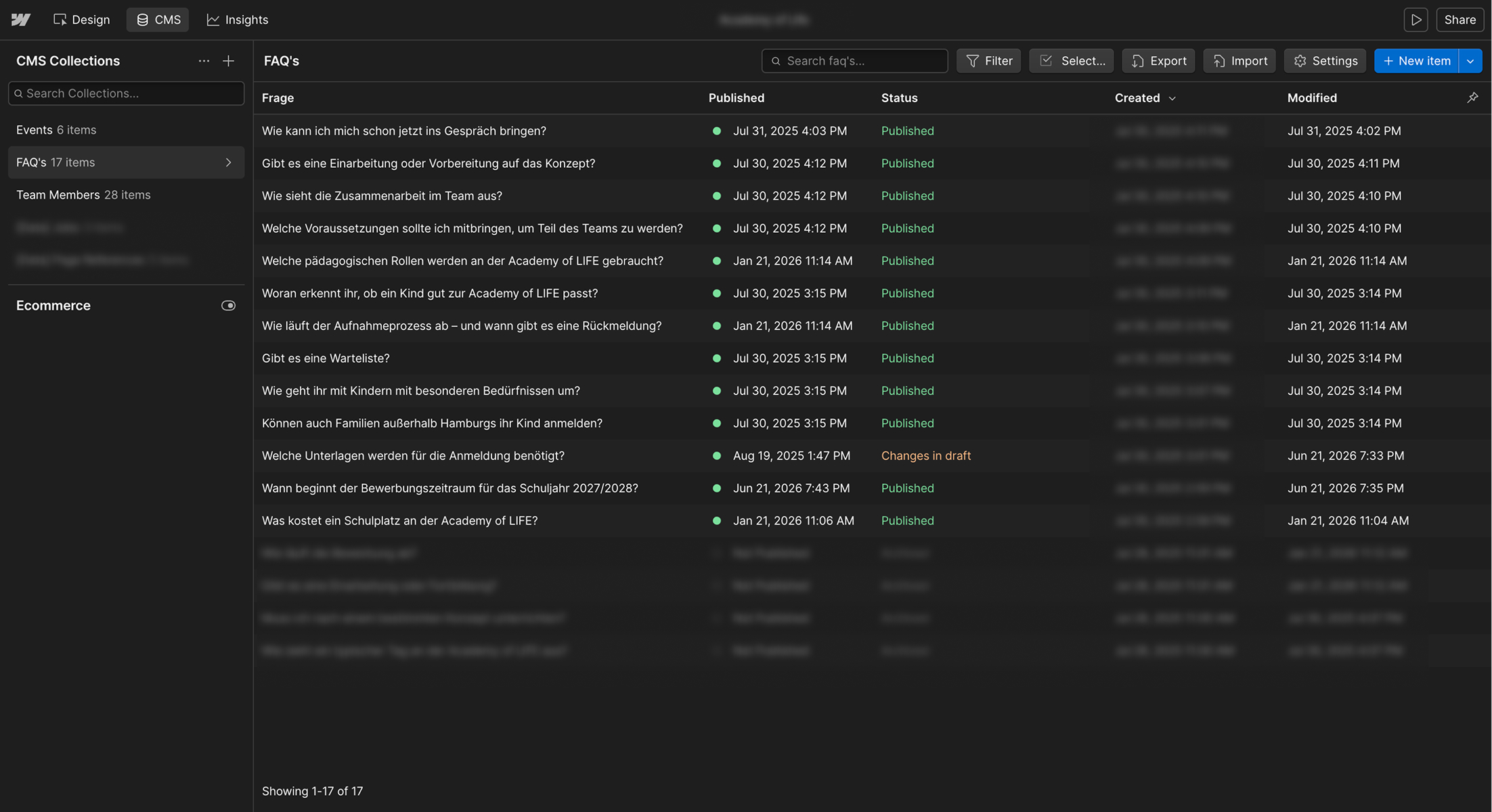
Where a school is still being founded, the website has to build the trust that everyday school life would otherwise create. From the Academy of LIFE design manual, we developed a dedicated web design in Figma that carries the brand's circle shapes, color areas, and illustrations onto the web and gives the new school a face from the very first visit. With Webflow as the foundation, the school team maintains events, FAQ, team profiles, and job openings independently and without coding skills, since all content is set up as collections. A Make flow connects the inquiry form with Mailchimp: every enrollment inquiry is saved, created as a contact, and automatically triggers the appropriate email sequence. Cookie consent and accessibility meet the standards of an educational institution, and the site went live just six weeks after design started. Since launch, we have been continuously developing the website further.
10
School grades at the new learning location
6
weeks from design to finished website
1
Make-Flow for automated school enrollment inquiries
Academy of LIFE is being founded as a project of the Holistic Foundation on the LIFE HAMBURG campus and aims to offer children in grades 1 to 10 a learning environment focused on their strengths. While the school is still under construction, families are already looking for guidance: how is learning organized here, when can we get to know the school, how do we secure a place? There was no website to answer these questions. All that existed was a design manual with logo, colors, and typography that covered flyers, posters, and roll-ups but contained no guidelines for the web. In addition, there were no photos of the actual learning space yet, because the school is still being built. At the same time, every enrollment inquiry, with extensive details about child and family, had to reach the school team completely and be processed without manual effort. The website therefore had to build trust, make the concept tangible, and reliably guide families through to application.
From frustration to a solution that just works.
These are the most common reasons companies come to us—and how we solve them.
The design manual covered flyers, posters, and roll-ups with logo, colors, and typography, but guidelines for the web were missing entirely. The brand therefore first had to be translated into a digital identity that works on every device while carrying the school's visual language forward.
We translated the brand's circle element, color palette, and illustrations into a dedicated web design in Figma. Color areas and circle shapes structure the pages, the illustrations create warmth, and the result is a presence that consistently continues the design manual and gives the school a face.
Since the school is still being founded, there are no photos of the actual learning space, classrooms, or everyday school life yet. For families who want to build trust, the most important visual foundation is therefore missing.
Curated brand imagery and architecture renderings effectively carry the visual identity.
An enrollment inquiry captures extensive details about child and family, from grade and date of birth to contact information, all of which must reach the school team completely and without errors. A simple form email would quickly become confusing and error-prone at this scope.
A structured form hands all details directly to a Make flow for further processing. There, every inquiry is saved, created as a contact in Mailchimp, and the appropriate email sequence is started automatically, so nothing is lost and the team can respond immediately.
The visual world of the design manual continues on the web: the brand's color areas, circle shapes, and illustrations were translated into a dedicated web design in Figma and give the new school a face from the very first visit. Because there are no photos of the learning space yet, labeled brand imagery and architectural renderings carry the presence and make the concept tangible for families.

Events, FAQ, team, and job openings are set up as collections in Webflow, so content can grow without the layout having to be adjusted. The school team maintains new dates, answers, and team profiles independently and without coding skills. This way, the website grows along with the school, from the first open days to full operation with grades 1 to 10.
Every enrollment inquiry is captured via a structured form, saved in Make, created as a contact in Mailchimp, and automatically triggers the appropriate email sequence. The extensive details about child and family reach the school team completely, without manual transfer. Families receive an immediate response, and the team keeps an overview of all inquiries at all times.
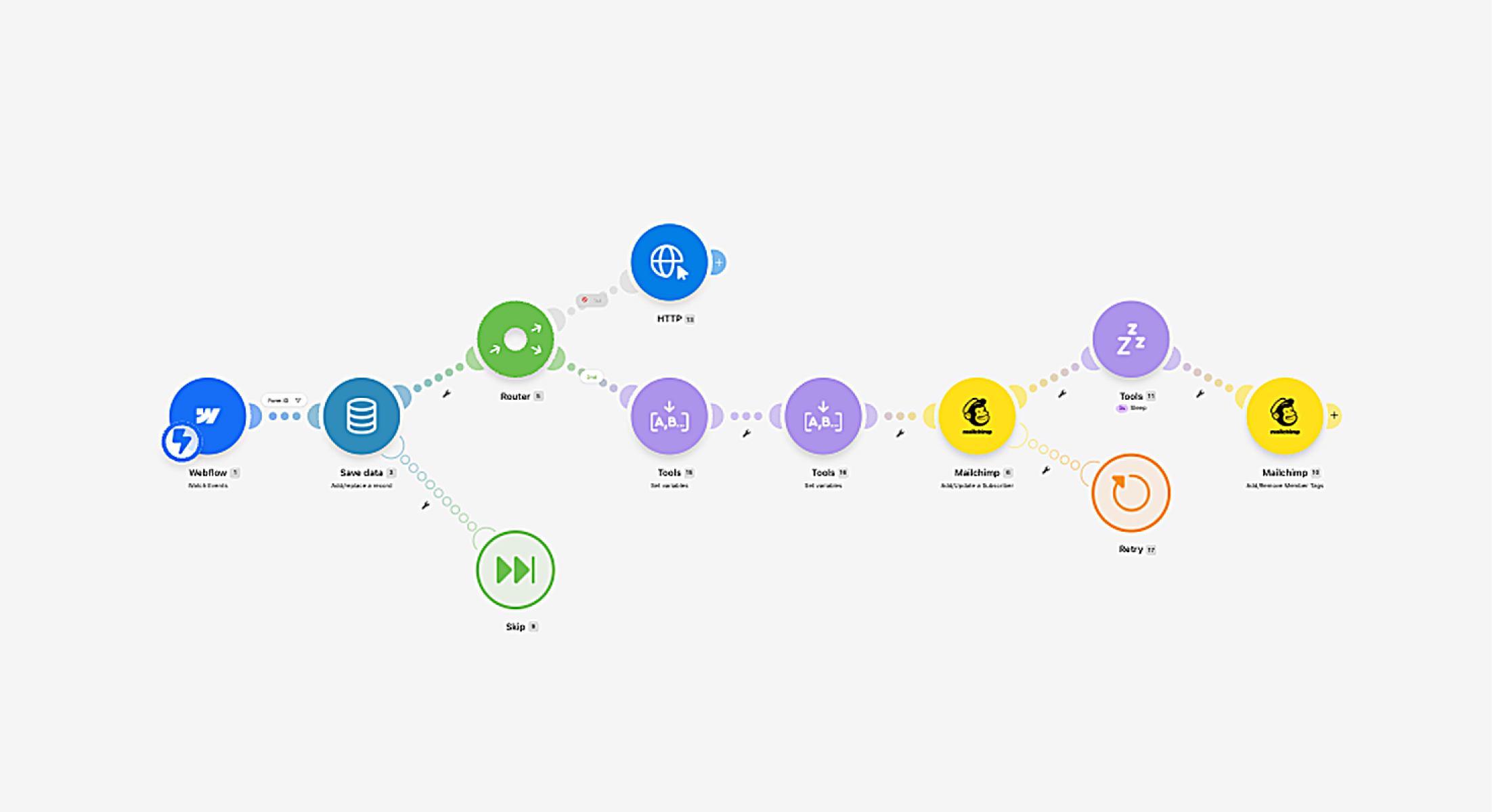
From the design manual, we developed a web design in Figma that carries the brand forward in color and form: circle element, color palette, and illustrations continue on the web and give the new school a face. Since there are no photos of the learning space yet, labeled brand imagery and architectural renderings carry the visual identity. In Webflow, this became a CMS-driven website in which events, FAQ, team, and job openings are set up as collections. The school team maintains this content independently and without coding skills, and content can grow without the layout having to be adjusted. A structured inquiry form hands every enrollment inquiry directly to a Make flow that saves the data, creates a contact in Mailchimp, and automatically triggers the appropriate email sequence. Cookie consent and accessibility were considered from the start. Six weeks passed from design to finished website, and since launch we have been continuously developing the presence further.