



From September 1st to 3rd, it was that time again: Webflow Conf 2026 in Boston. We were there live—and honestly, we’ve been excited for months, because as a Webflow Enterprise Partner, we were able to test several features in beta or research preview beforehand. Now it’s finally official, and we can say: there’s a lot coming our way.
Webflow CEO Linda Tong opened the conference with a thesis that really stuck with us: the definition of a "builder" is broadening. It’s no longer just designers and developers building websites—marketers and AI agents are increasingly taking on this role as well. Almost every announcement in Boston can be traced back to this idea, which is exactly why Webflow Conf 2026 is more than just a feature showcase for us.
However, this doesn't mean developer expertise is becoming less important—on the contrary: the more technology handles the implementation, the more critical architecture, technical judgment, and a solid foundation become. Three announcements really grabbed our attention: Source by Webflow, MCP 2.1, and AEO. Let’s take a closer look at those.
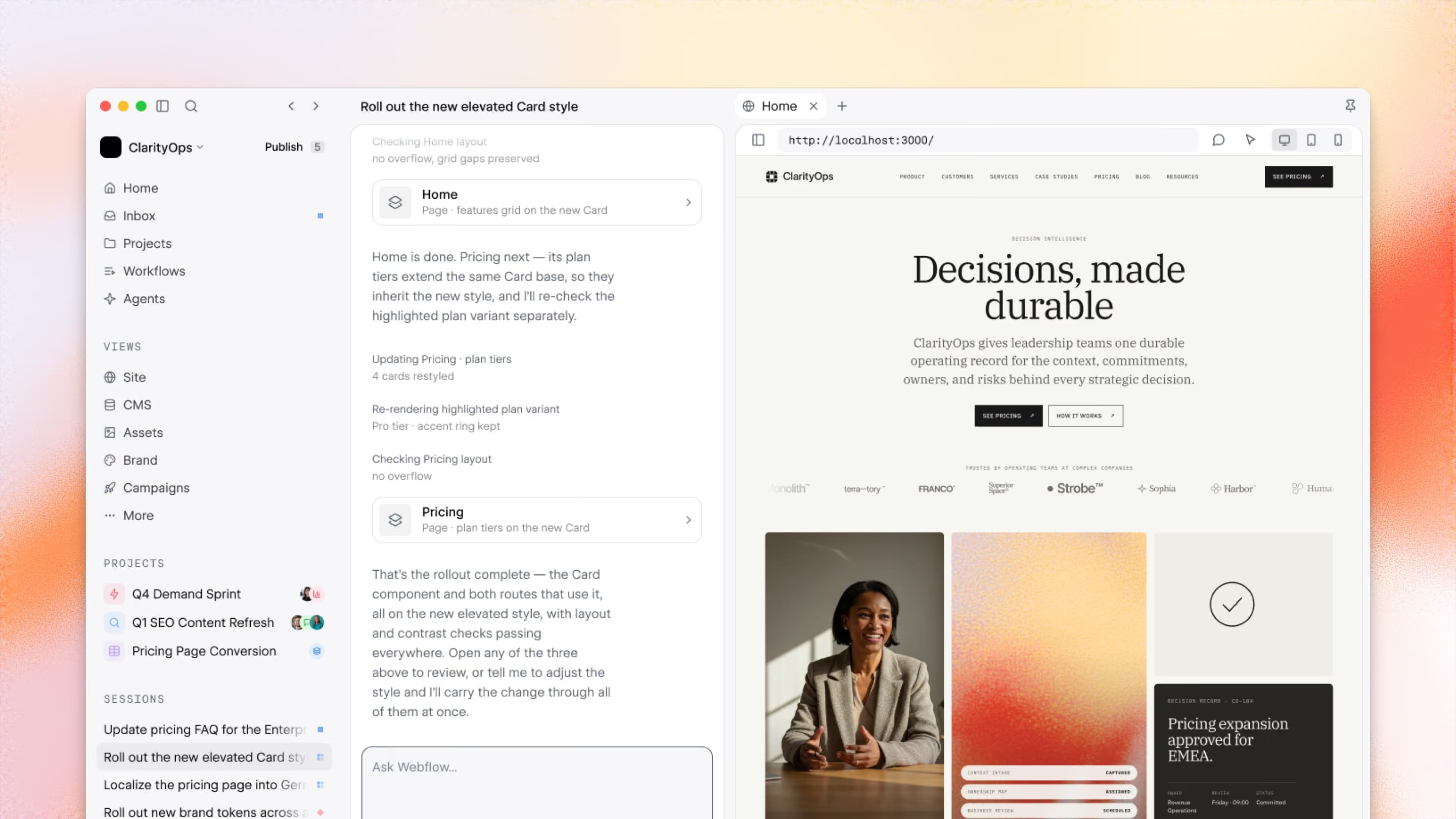
Source by Webflow: The announcement we were waiting for most
Source by Webflow is a completely new environment—separate from the classic Designer—where marketing teams and their AI agents work directly on the code. The codebase, CMS, hosting, and the entire martech stack converge here in a shared workspace. Every role gets its own tailored workspace via so-called "views."
The principle behind it: Code becomes the source of truth. Agents handle major changes directly, while the visual canvas writes the same code in the background. Role-based access rights, approval processes, and a complete action history ensure that nothing goes live uncontrollably. Currently, Source is running as a limited research preview by application—pricing and full availability have not yet been determined.
For us, this is the logical evolution of something we are already solving for clients today through automation and sync processes: a system where marketing and tech work on the same foundation instead of coordinating through endless handoffs.
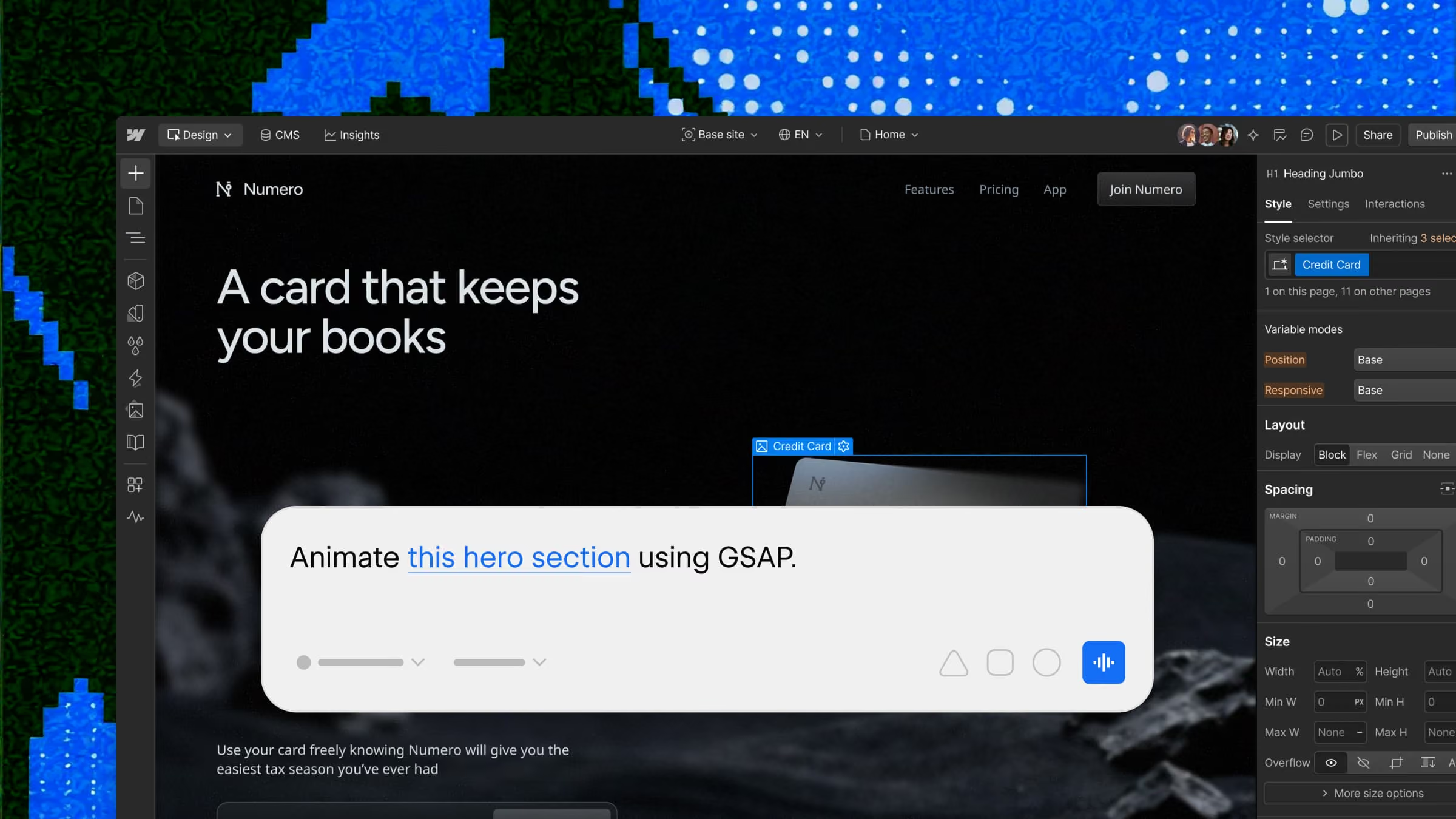
MCP 2.1: AI agents become real team members
The Model Context Protocol (MCP) is the standard that allows AI assistants like Claude, ChatGPT, or Cursor to read and edit a Webflow website. With MCP 2.1 , Webflow is stepping up in three directions: agents can now implement GSAP animations via prompt, including timeline control. CMS queries are becoming significantly smarter—with custom fields, references, and pagination in a single query instead of a whole chain of requests. And deployment errors go directly to agents like Claude Code, without anyone having to manually jump back and forth between the terminal and the dashboard.
The rollout to all customers has been underway since September 2026. For us as an agency, the improved CMS querying is a particular game-changer: what used to be a chain of individual, expensive requests is now a targeted query—a detail that saves a lot of time on data-intensive, multilingual projects.
A quick reality check: where we are already living this today
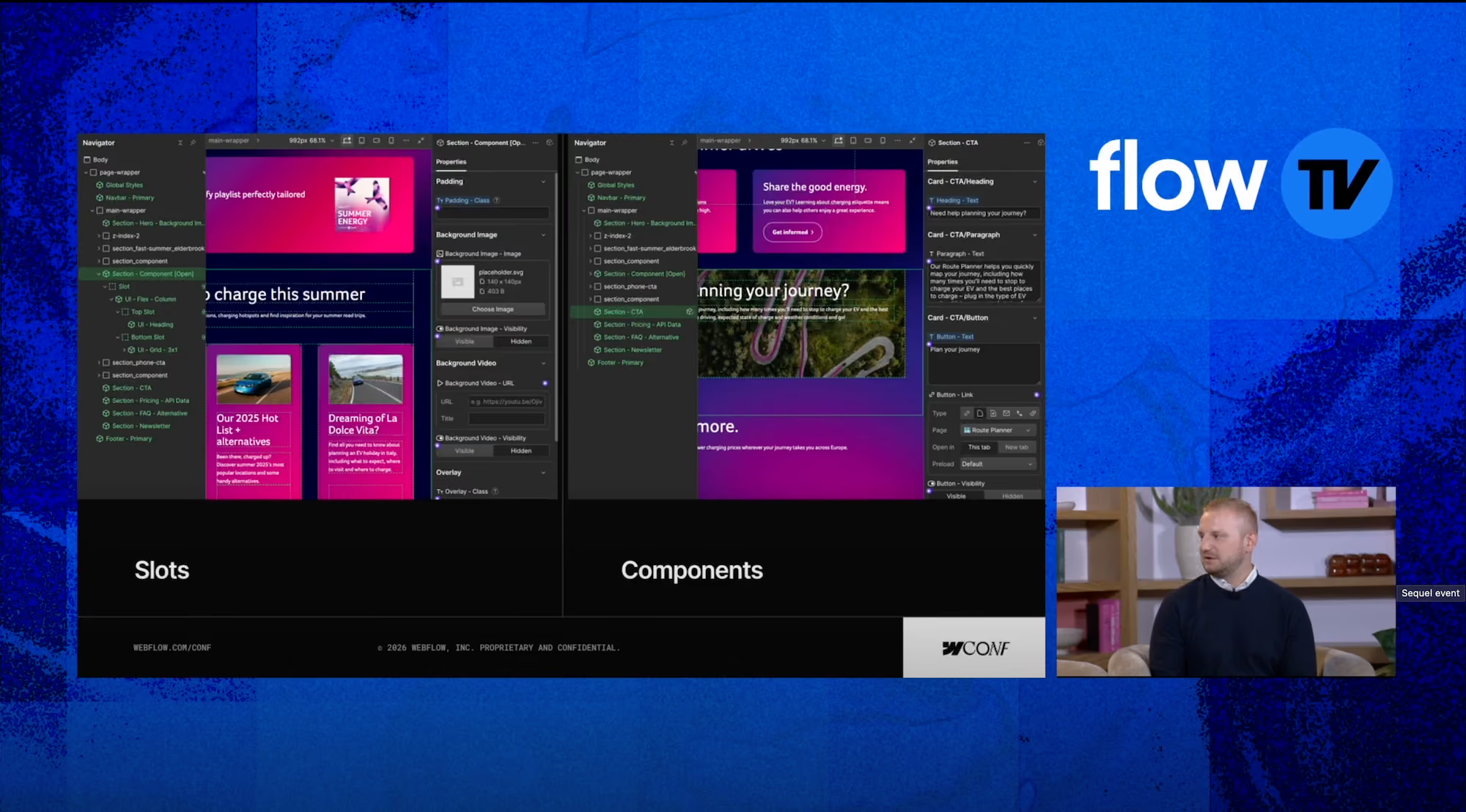
We demonstrated just how relevant this development is in everyday life live on stage in Boston—together with our client IONITY, Europe's leading high-power charging network for electric vehicles. IONITY manages its digital presence in 24 countries with a team of just two people. Instead of scaling up headcount, IONITY relies on Automation, AI-powered localization, and daily content syncs – without the need for a traditional translation management system or a developer queue. Click here to watch the recording.
In short: What Webflow is currently making accessible to everyone with Source and MCP 2.1, we are already building today with clients like IONITY. That is exactly why we are not just curious about these new tools, but genuinely excited about what will be possible with them in the future. Find out more about the Ionity case here.
AEO: Visibility in ChatGPT, Perplexity, and more.
Beyond traditional SEO, it is becoming increasingly relevant whether a website is actually found, understood, and cited by AI systems like ChatGPT, Gemini, or Perplexity. Webflow has published an internal analysis of 2,000 companies on this topic—and the figures genuinely surprised us: on average, a company appears in only 16% of the AI responses where it should be present, and it is cited in only 6% of cases.
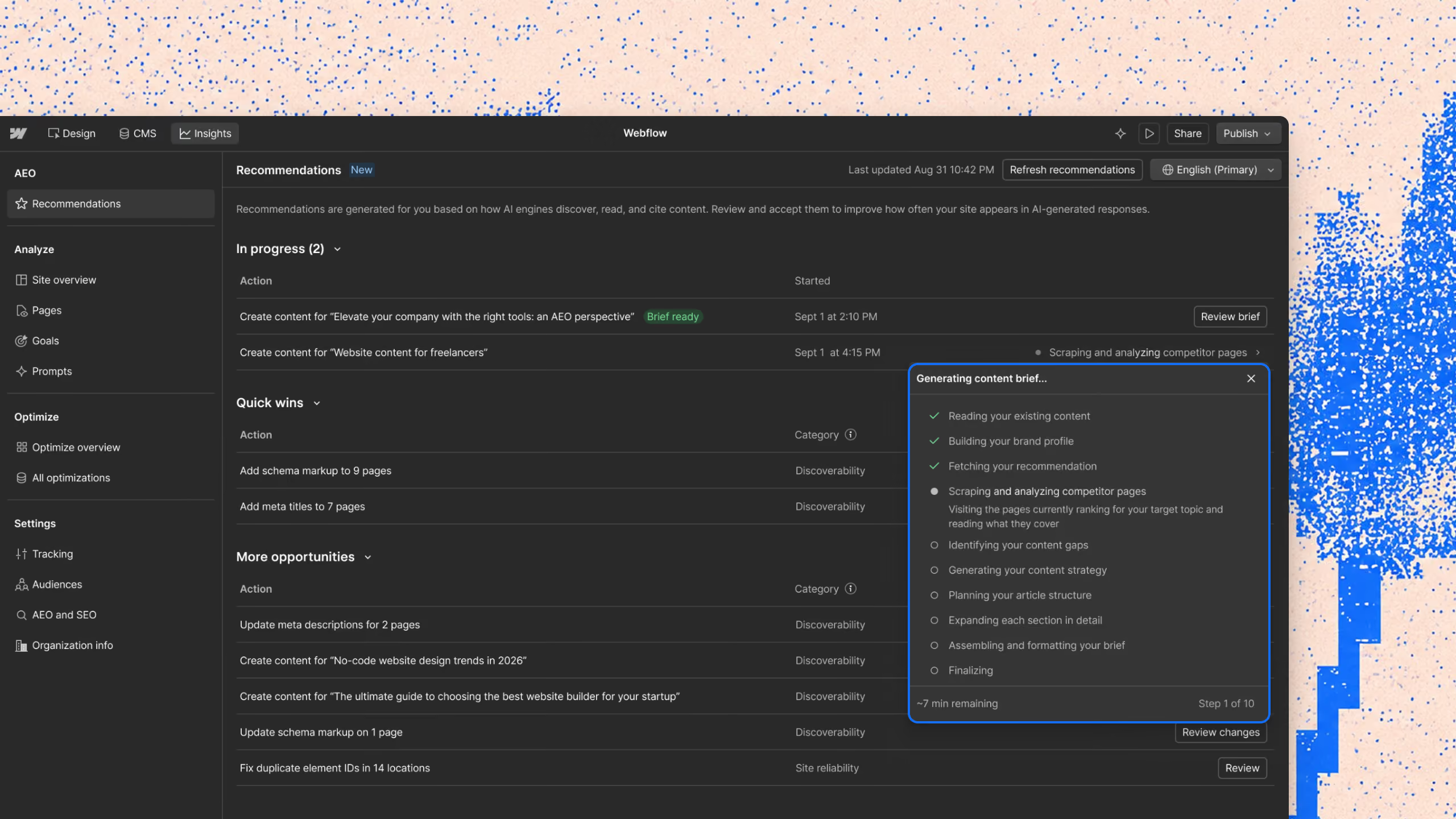
Webflow AEO aggregates data from ChatGPT, Gemini, and Perplexity, shows where a brand is mentioned and where it isn't, and suggests concrete corrections for metadata, alt text, and structure. It gets really exciting with the new content agents: they independently identify topics where competitors are being cited, write a briefing, and deliver a first draft directly into the CMS.
For international brands, this means that visibility in AI search systems is becoming a permanent, additional discipline alongside traditional SEO—one that must be kept consistent across all markets without requiring a dedicated team.
What this means for your website
The direction of Source, MCP 2.1, and AEO is clear to us: fewer manual handoffs, more automation, and AI agents as a fixed component of the workflow—all while maintaining full control over brand, quality, and approvals. As the IONITY case shows, this type of scaling can be implemented today with the right processes, and these new tools will make it even more accessible in the future.
However, a Webflow website won't automatically become better just because of this. The decisive factor remains how well-thought-out the architecture, CMS, and processes are—AI tools primarily amplify what is already well-structured, or, conversely, what is not.
Conclusion
Webflow Conf 2026 did more for us than just introduce new features: it showed where the platform is heading—toward lean teams that, thanks to automation and AI, can handle scaling that previously would have required entire departments. As a Webflow Enterprise Partner, we are really looking forward to implementing this with you.
As a Webflow agency based in Hamburg, we support exactly these kinds of setups—from the initial architecture to operations across multiple markets. If you want to know what Source, MCP 2.1, or AEO specifically mean for your website, feel free to get in touch with us.




.avif)
Recommend this post